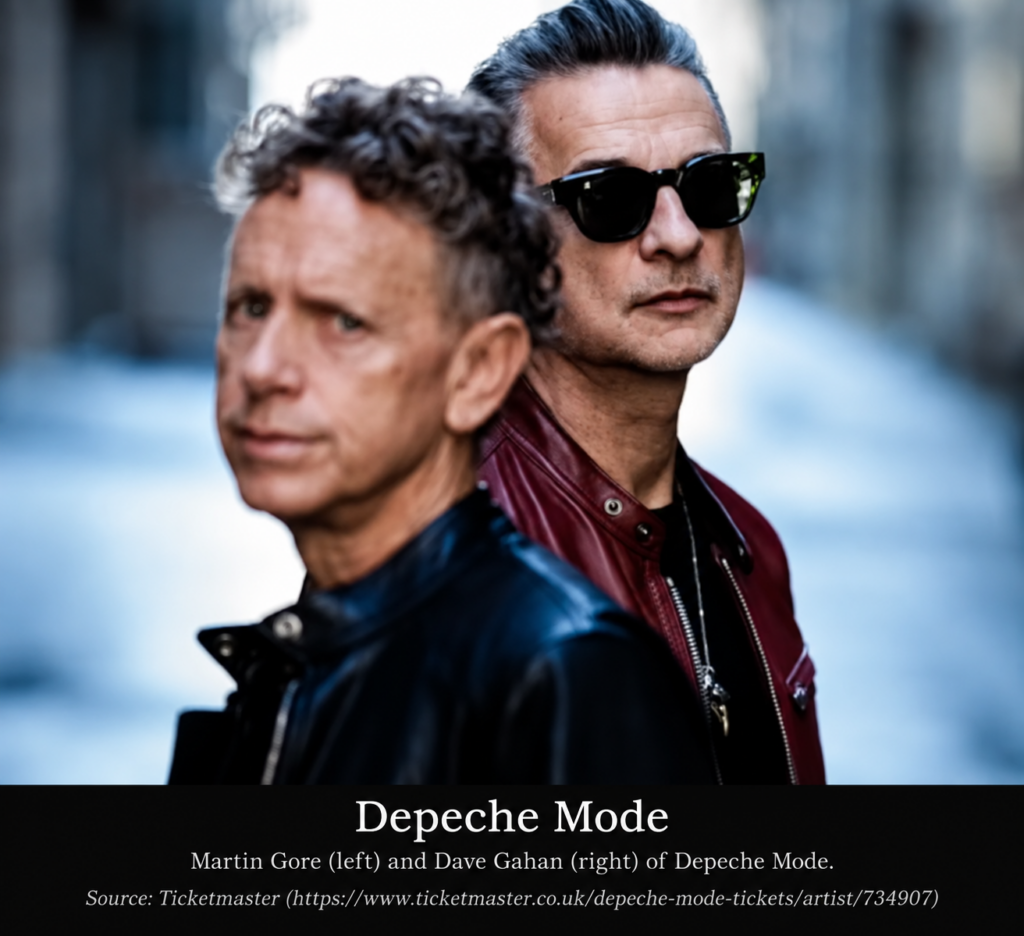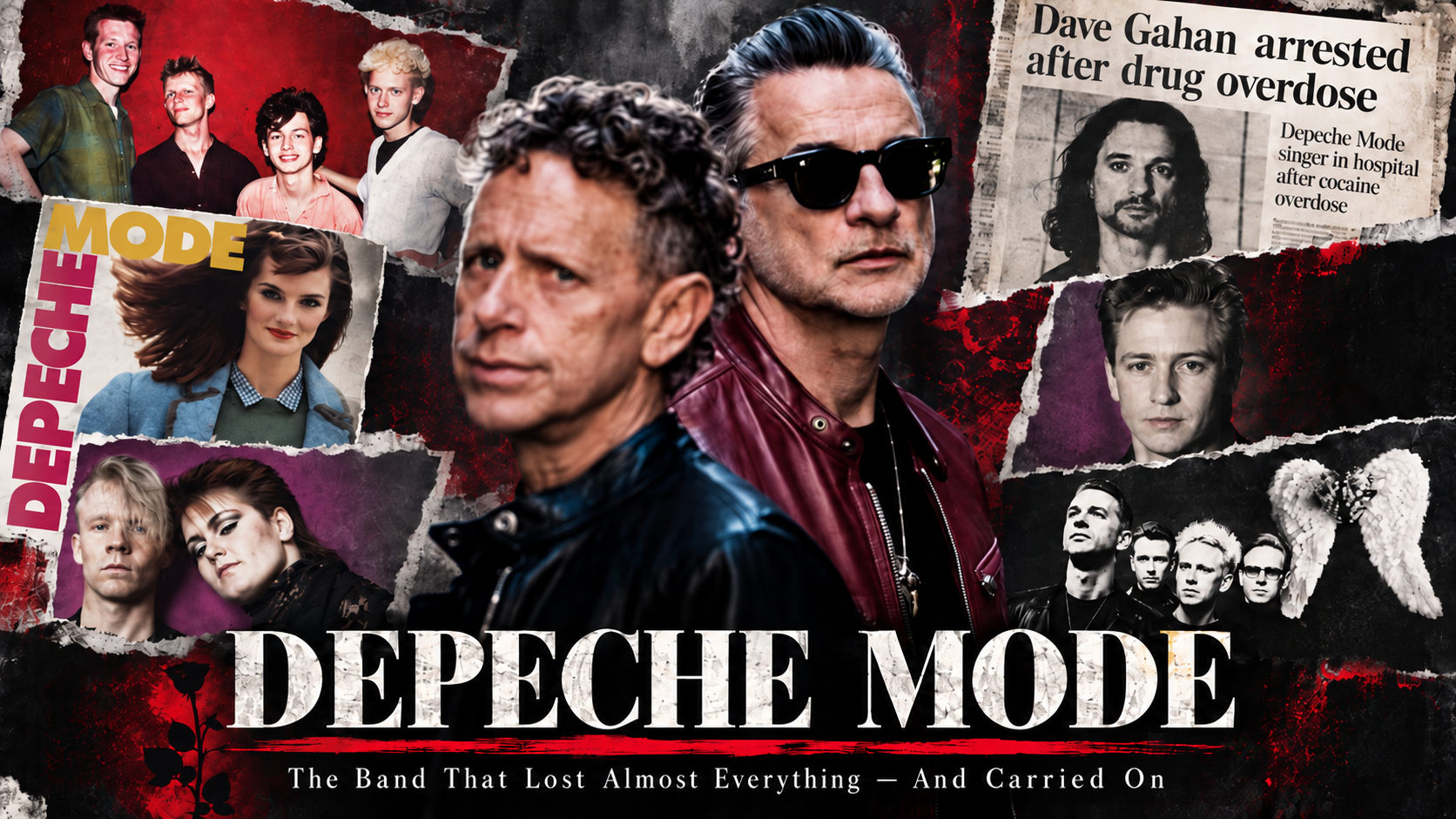
They lost their original songwriter after one album. Their studio mastermind eventually walked out. Their singer died for two minutes. And the man who appeared to spend much of his career standing behind a keyboard looking concerned died suddenly in 2022.
Most bands would regard any one of these events as a fairly persuasive hint from the universe.
Depeche Mode regarded them as scheduling difficulties.
More than four decades after four young men from Basildon decided that guitars were apparently an unnecessary extravagance, Depeche Mode have sold somewhere in the region of 100 million records, filled stadiums around the world and been inducted into the Rock and Roll Hall of Fame.
None of which was remotely guaranteed.
In fact, at several points in their career, continuing as a band looked less like determination and more like a refusal to acknowledge increasingly aggressive correspondence from fate.
Four Men, Several Keyboards and Basildon
Depeche Mode began life in Basildon, Essex, in 1980, when Vince Clarke, Andy Fletcher and Martin Gore were playing together as Composition of Sound... Yeah, I know, It is difficult to imagine a name better suited to a local authority leaflet about noise pollution.
Dave Gahan later joined as singer and suggested something considerably more glamorous: Depeche Mode, taken from the title of a French fashion magazine.
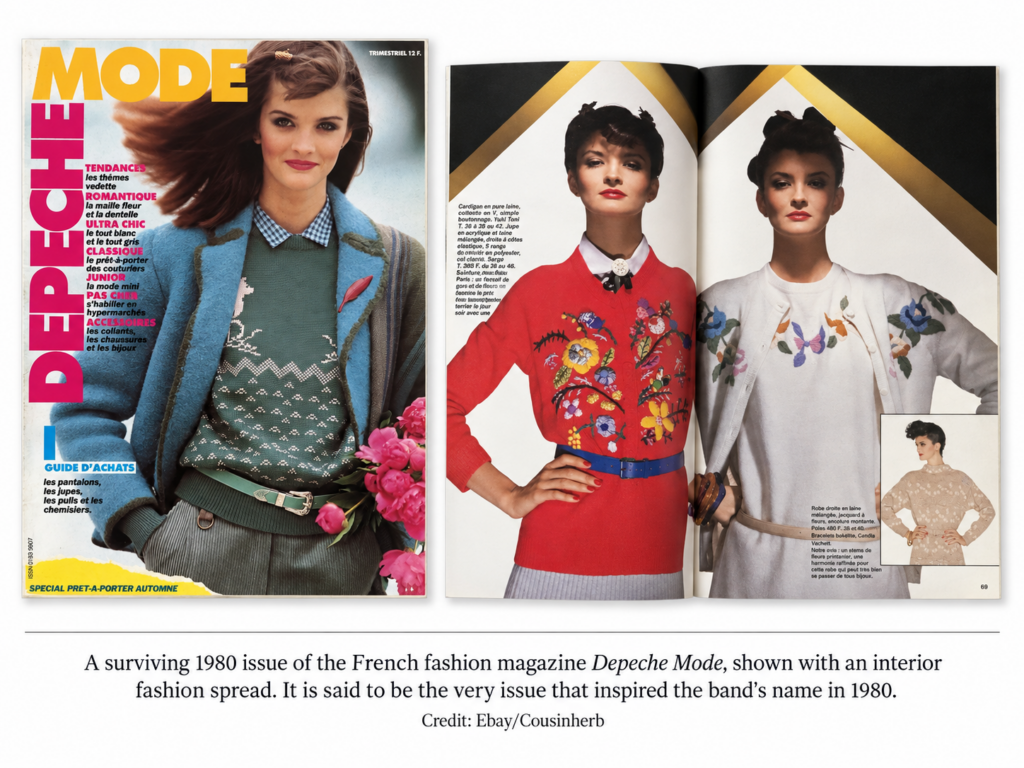
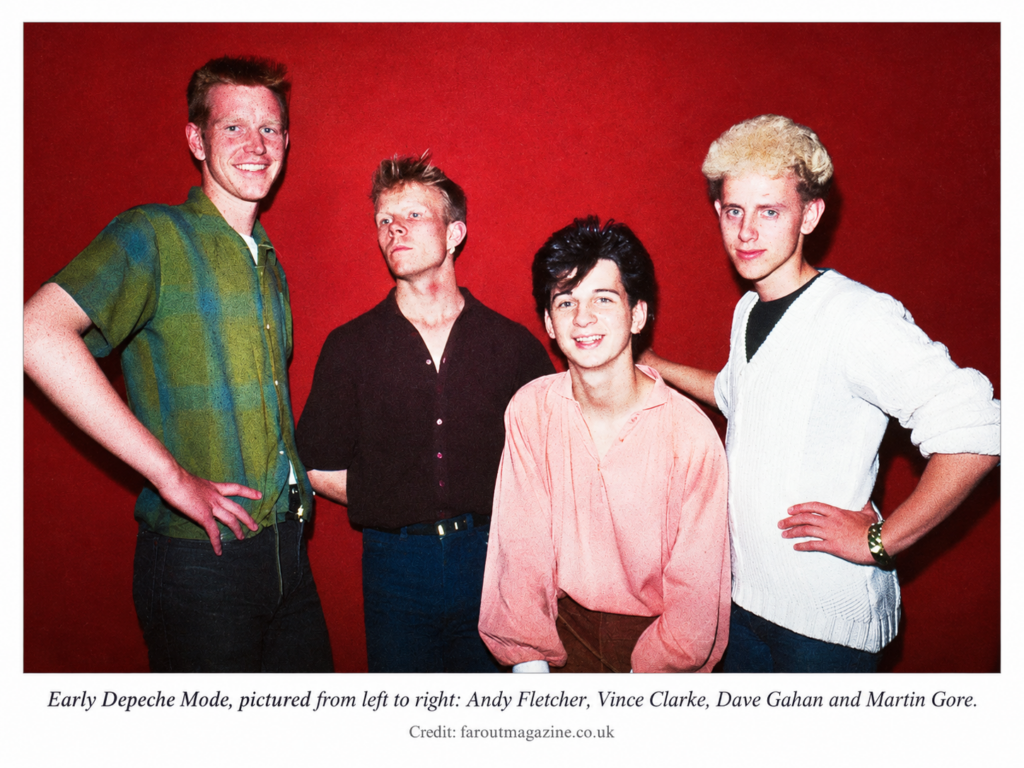
Suddenly four young men from Essex who were carrying synthesisers around on public transport sounded as though they ought to be smoking Gauloises outside a boutique in Paris.
The reality was somewhat less sophisticated.
They had little money, limited equipment and, at times, no van. What they did have was Vince Clarke.
Clarke was the band’s early songwriting engine, producing tracks including Dreaming of Me, New Life and, most significantly, Just Can’t Get Enough.
Their debut album, Speak & Spell, arrived in 1981 and reached the UK Top 10.
Depeche Mode were suddenly on television. Their records were selling. Audiences were turning up.
Everything was going suspiciously well.
So, naturally…
Vince Clarke left!
Clarke departed in late 1981, complaining about touring, publicity and the general circus developing around the group.
This presented Depeche Mode with what musicians sometimes refer to technically as “a bit of a problem”.
The man responsible for most of the songs had just walked out after their first album.
Worse still, Clarke immediately demonstrated that leaving Depeche Mode had not deprived him of his ability to write successful records.
He formed Yazoo with Alison Moyet and produced Only You, which became a major hit. After Yazoo ended, Clarke formed Erasure with Andy Bell, beginning another hugely successful career.
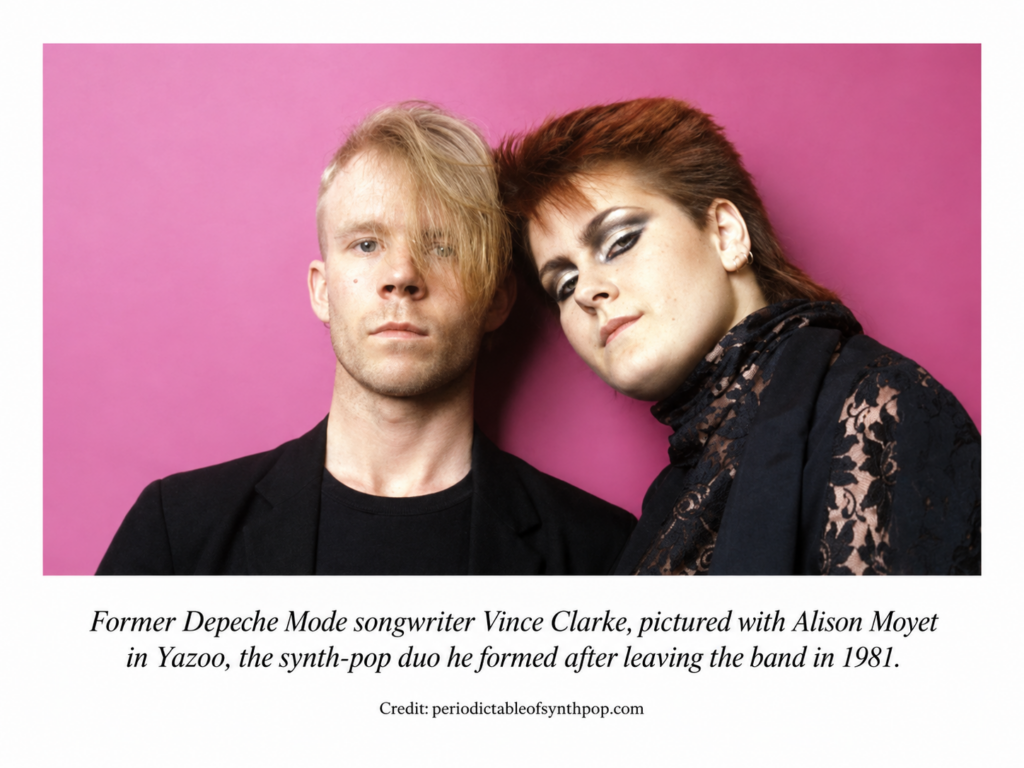
So, there was no comforting period during which the remaining members could watch Clarke release an experimental kazoo album to six people in Luxembourg and reassure themselves that they had clearly been carrying him all along.
He continued having hits.
Depeche Mode, meanwhile, needed a songwriter.
That responsibility fell to Martin Gore.
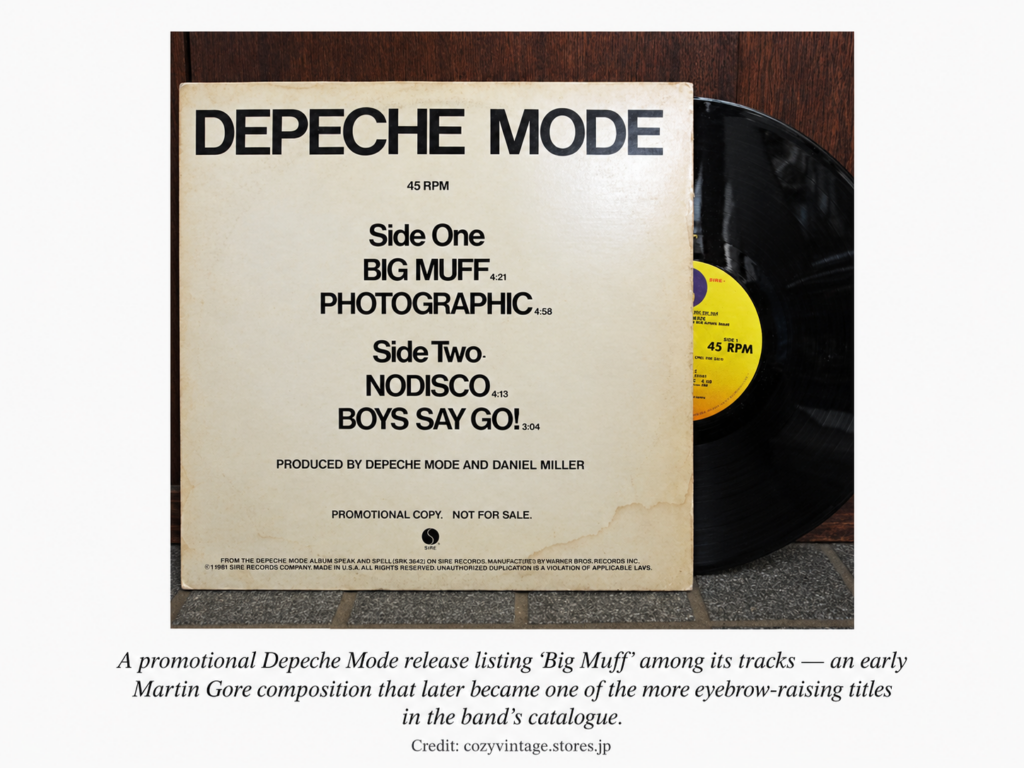
Until then, Gore had contributed only a small amount of material, including an instrumental called Big Muff.
And so, with the first album barely out of the packaging, the future of Depeche Mode suddenly rested with the quiet bloke who had written something called Big Muff.
Popular music is occasionally magnificent.
Enter Alan Wilder
The band also needed another musician.
An advertisement was placed looking for a keyboard player under the age of 21.
Alan Wilder applied.
He was 22.
So he lied.
Which, in fairness, showed the sort of initiative required for a long career in the music industry.
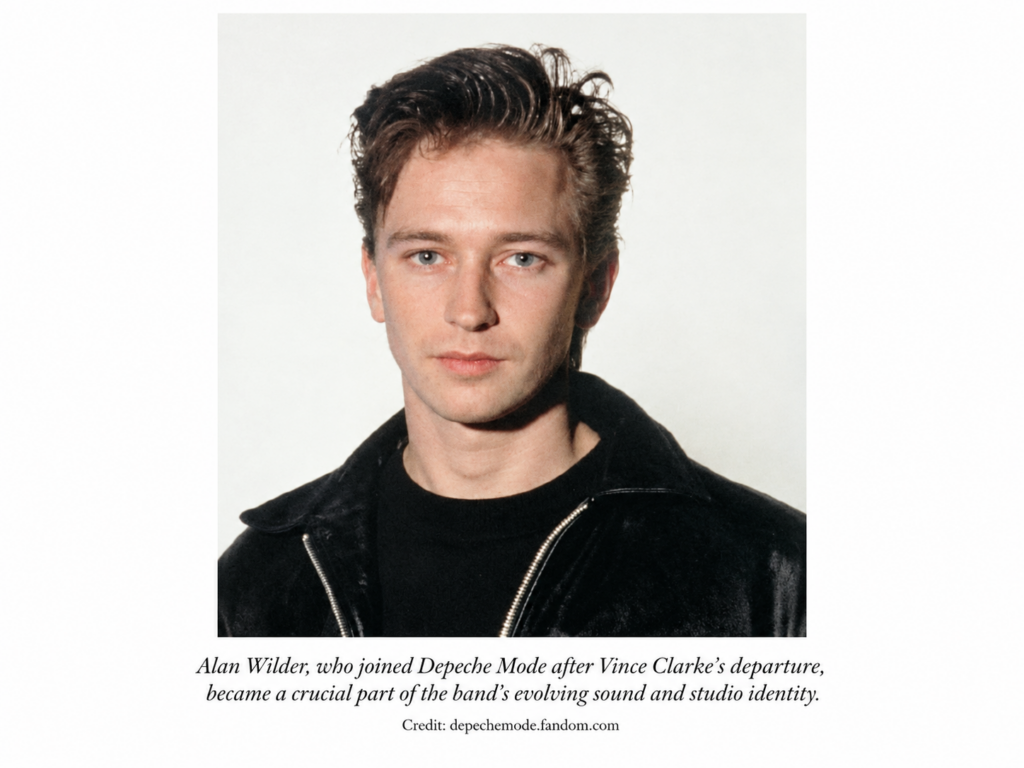
Wilder could also actually play extremely well; which was, as the cool kids say, Sick bruv.
He joined the band initially as a touring musician before becoming a full member, and over time his technical ability became increasingly important to the Depeche Mode sound.
The first post-Clarke single, See You, reached number six in the UK — higher than any Depeche Mode single had managed while Clarke was still a member.
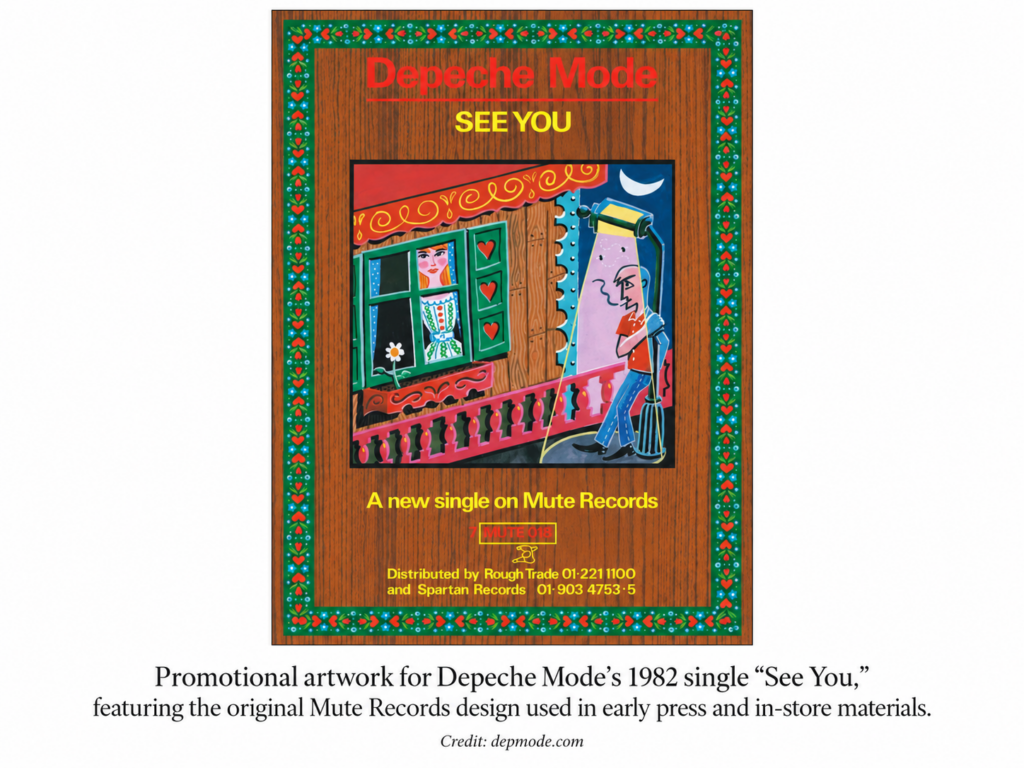
This must have been enormously reassuring to everybody involved and certainly prevented any competitive tension developing whatsoever.
From there, however, something genuinely interesting happened.
Depeche Mode stopped sounding like a promising synth-pop group and began turning into Depeche Mode.
Then Things Started Getting Strange
With Gore increasingly confident as a songwriter, and Wilder becoming deeply involved in production and arrangement, the band’s music became harder, darker and considerably more peculiar.
Construction Time Again in 1983 introduced industrial sounds and extensive sampling.
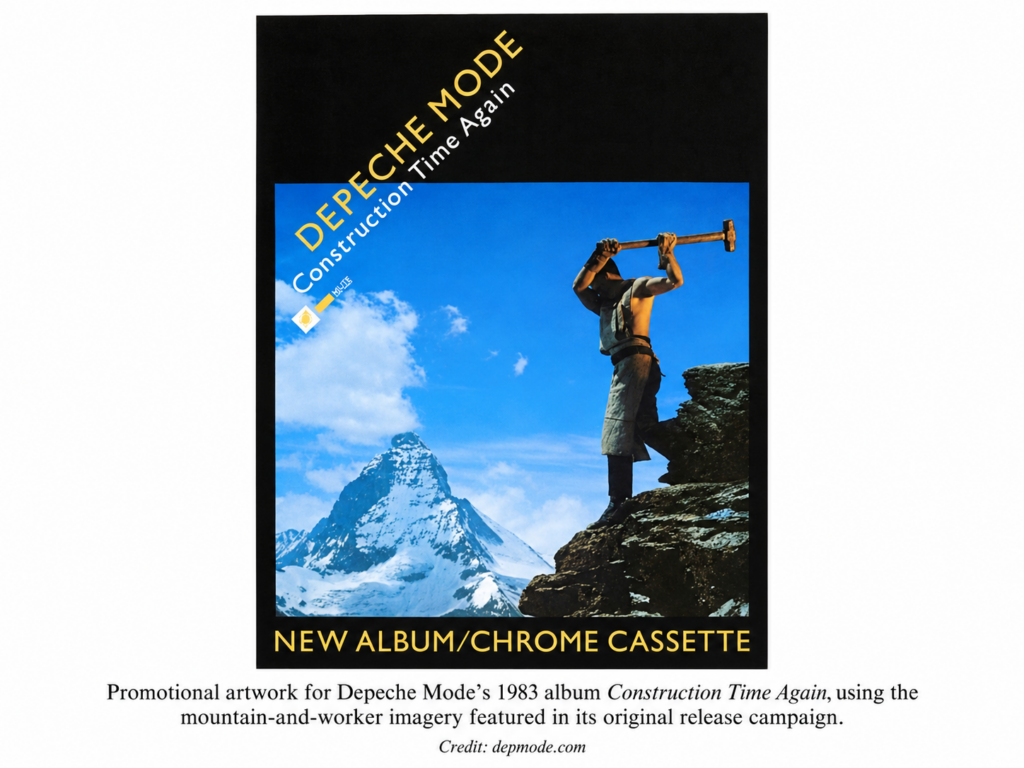
Rather than merely selecting another agreeable synthesiser preset and going home for tea, the band began recording metallic crashes, machinery, percussion and whatever else could be persuaded to make an unpleasant noise when struck.
The result was electronic music that suddenly had weight.
Some Great Reward followed in 1984, bringing People Are People, which became a major international hit.
Then came Black Celebration.
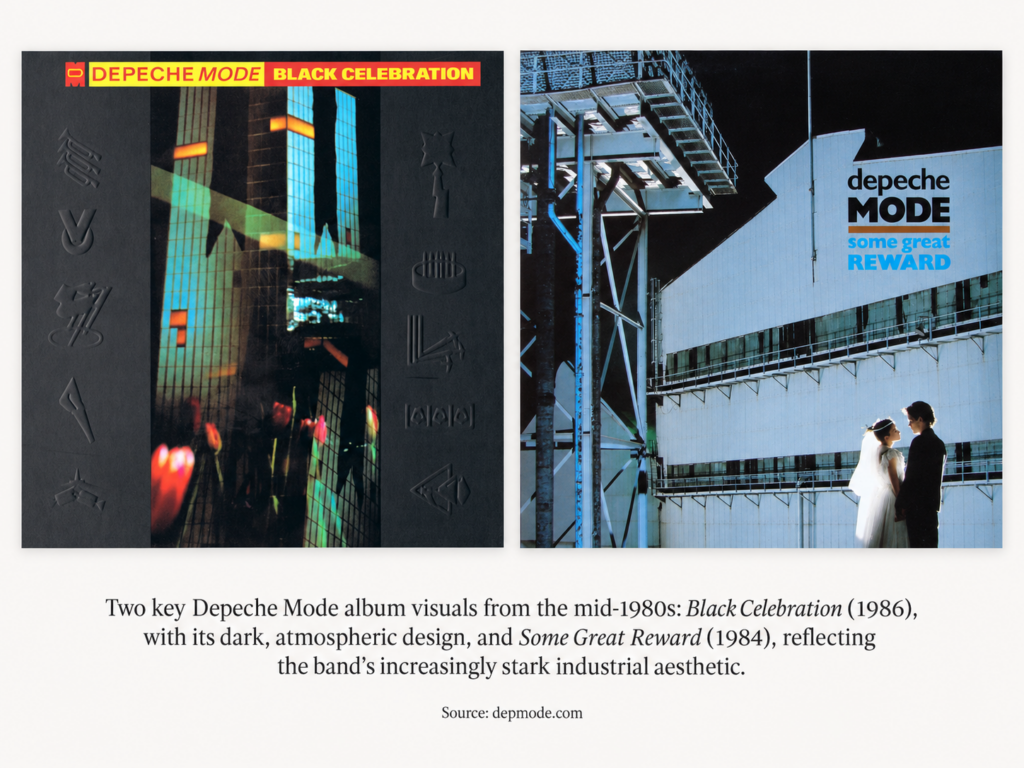
The bright early-1980s synth-pop colours were disappearing. Gore’s writing was becoming increasingly interested in guilt, religion, sex, obsession and emotional misery… essentially, all the subjects guaranteed to liven up a coach trip!
And the darker Depeche Mode became, the bigger they became.
By the end of the decade they were filling enormous venues, including California’s Rose Bowl, a concert immortalised in D. A. Pennebaker’s film 101.
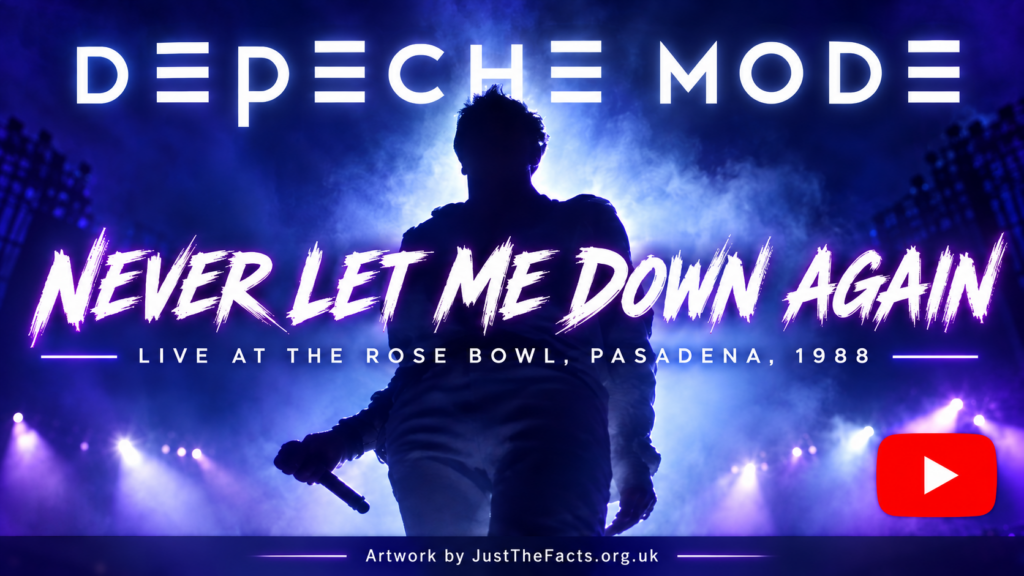
This was an electronic band from Basildon attracting stadium-sized American crowds during an era when popular rock culture was otherwise heavily populated by men wearing hairspray, leather trousers and enough scarves to constitute a fire hazard.
Depeche Mode didn’t look like the obvious stadium band.
This appeared not to trouble the people filling the stadiums.
What Exactly Did Andy Fletcher Do?
Within the band, however, the division of labour was becoming increasingly peculiar.
Gore wrote.
Gahan sang.
Wilder became heavily involved in transforming Gore’s compositions into the meticulously constructed records listeners actually heard.
And Andy Fletcher…
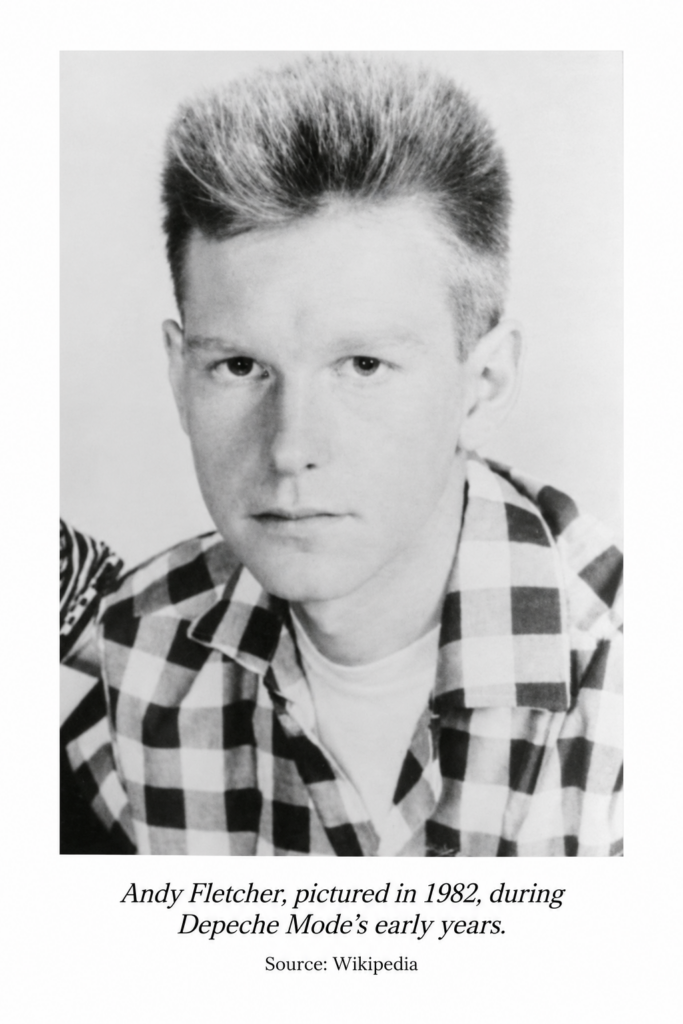
Well.
Fletcher himself was remarkably frank about his position in Depeche Mode.
He wasn’t the virtuoso musician. He wasn’t the main songwriter. He wasn’t the frontman or the studio obsessive.
His role was closer to intermediary, organiser, mediator and representative of the band’s business interests.
This has occasionally led people to ask what Fletcher actually contributed.
But, every dysfunctional organisation needs somebody who knows where everyone is supposed to be on Tuesday.
Never underestimate that person.
Particularly when the other members are about to begin behaving like contestants in an extremely expensive psychological experiment.
Violator Changes Everything
Then came 1990’s Violator.

If earlier Depeche Mode records had established them internationally, Violator turned them into something enormous.
Personal Jesus became one of their defining records.
Then came Enjoy the Silence.
Gore’s original conception of the song was considerably slower and more restrained. Wilder and producer Flood saw something else in it and developed it into the propulsive electronic anthem that eventually appeared on the album.
The record became one of Depeche Mode’s biggest songs.
Which demonstrates one of the cruellest truths in any creative profession: sometimes the other person fiddling with your brilliant idea is correct.
There are few experiences more offensive.
Violator sold millions.
Depeche Mode were now one of the largest alternative bands in the world.
Unfortunately, international superstardom apparently wasn’t complicated enough.
Welcome to the Early 1990s. Everyone Is Losing Their Mind.
The follow-up, Songs of Faith and Devotion, arrived in 1993.
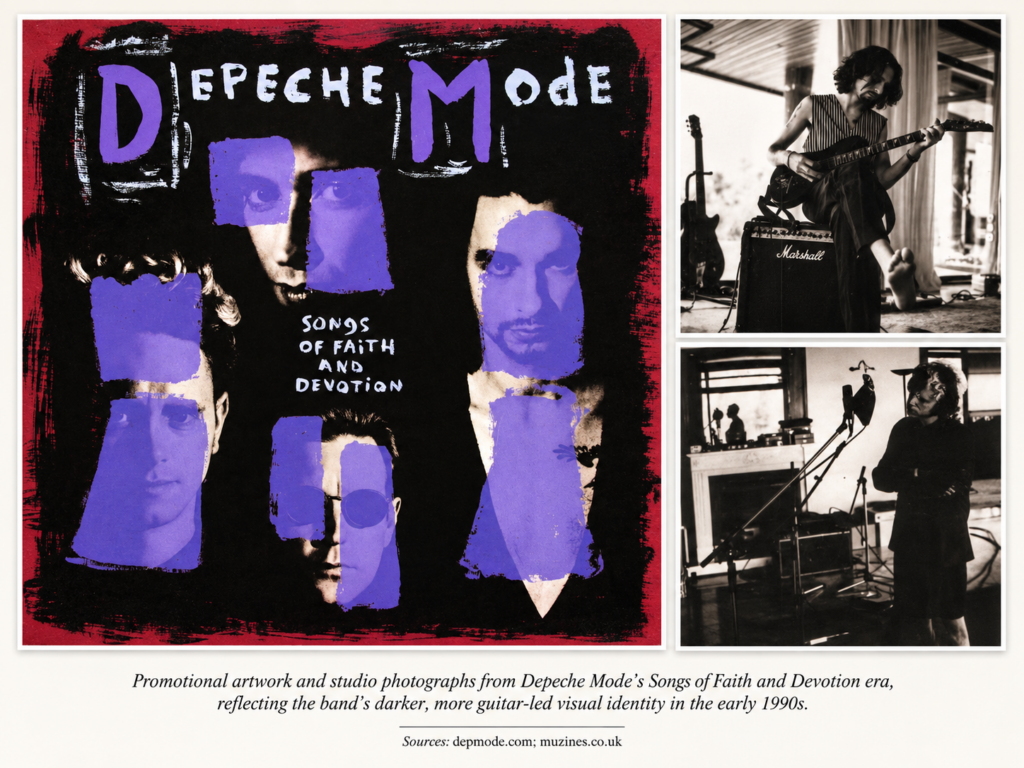
Musically, it pushed Depeche Mode further again, introducing more live instrumentation, rock influence and gospel textures.
Commercially, it was enormous, reaching number one in both Britain and the United States.
Behind the scenes, however, things were deteriorating at an impressive rate.
Gahan had moved to Los Angeles and developed a serious heroin addiction.
Gore was drinking heavily.
The recording sessions became increasingly fraught.
Wilder was shouldering a substantial amount of the musical and production work.
Fletcher suffered serious mental-health difficulties and was eventually forced to leave part of the subsequent tour.
The enormously successful Devotional Tour became notorious for its excesses and instability.
It had reached the stage at which successfully getting four people onto the same continent probably deserved its own production credit.
And then Alan Wilder had enough.
Alan Wilder Leaves…
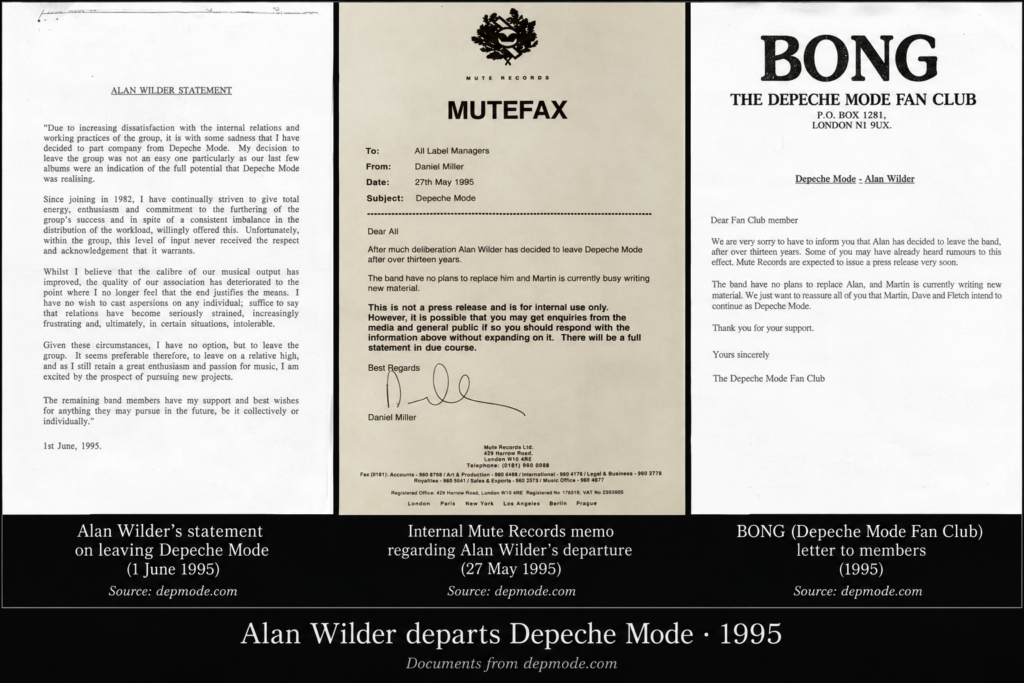
In 1995, Wilder announced his departure after approximately 13 years with the group.
His statement made clear that he felt the enormous effort he had invested in Depeche Mode was not being adequately acknowledged.
This was not a trivial departure.
Wilder had become central to the sonic architecture of the band.
Gore might write a song with an acoustic guitar or keyboard, but Wilder had played an enormous part in turning those compositions into the vast, strange electronic landscapes that characterised Depeche Mode’s recordings.
And now he was gone.
The band had already lost its original principal songwriter.
Now it had lost arguably its most technically important musical member.
Then Dave Gahan died.
Not metaphorically.
Actually.
Dave Gahan Dies… Briefly.
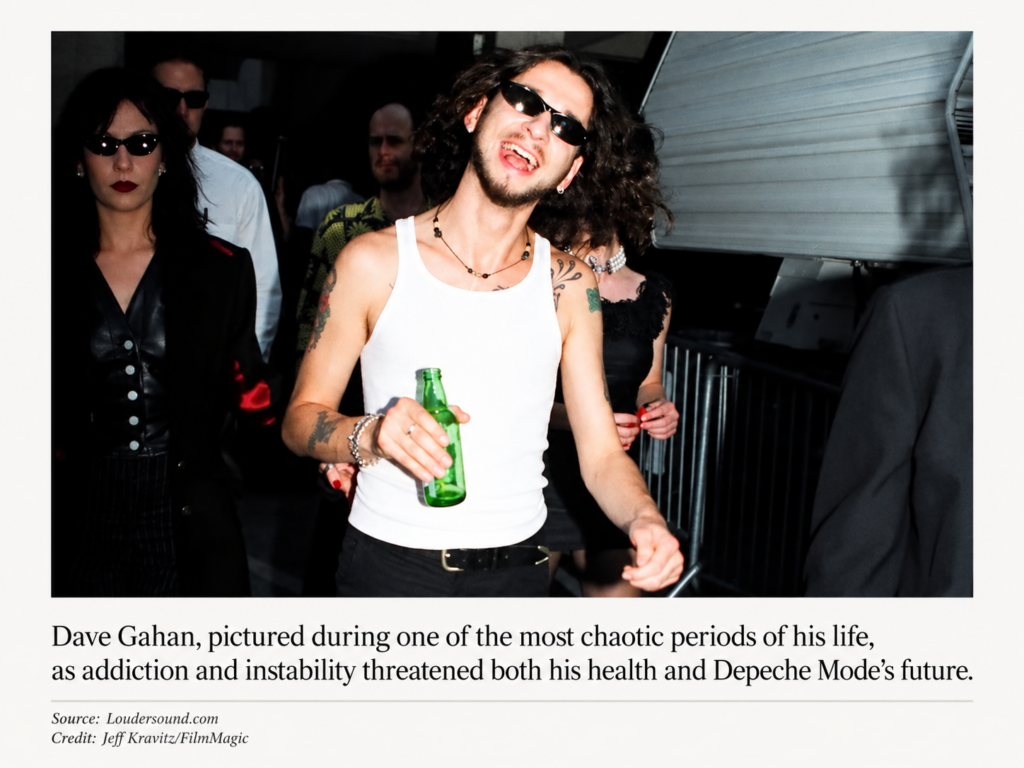
By the mid-1990s, Gahan’s addiction had become catastrophic.
In 1995, he survived a suicide attempt.
Then, on 28 May 1996, while staying at the Sunset Marquis hotel in Los Angeles, Gahan overdosed following the use of a ‘speedball’… heroin and cocaine.
His heart stopped.
For around two minutes, Dave Gahan was clinically dead.
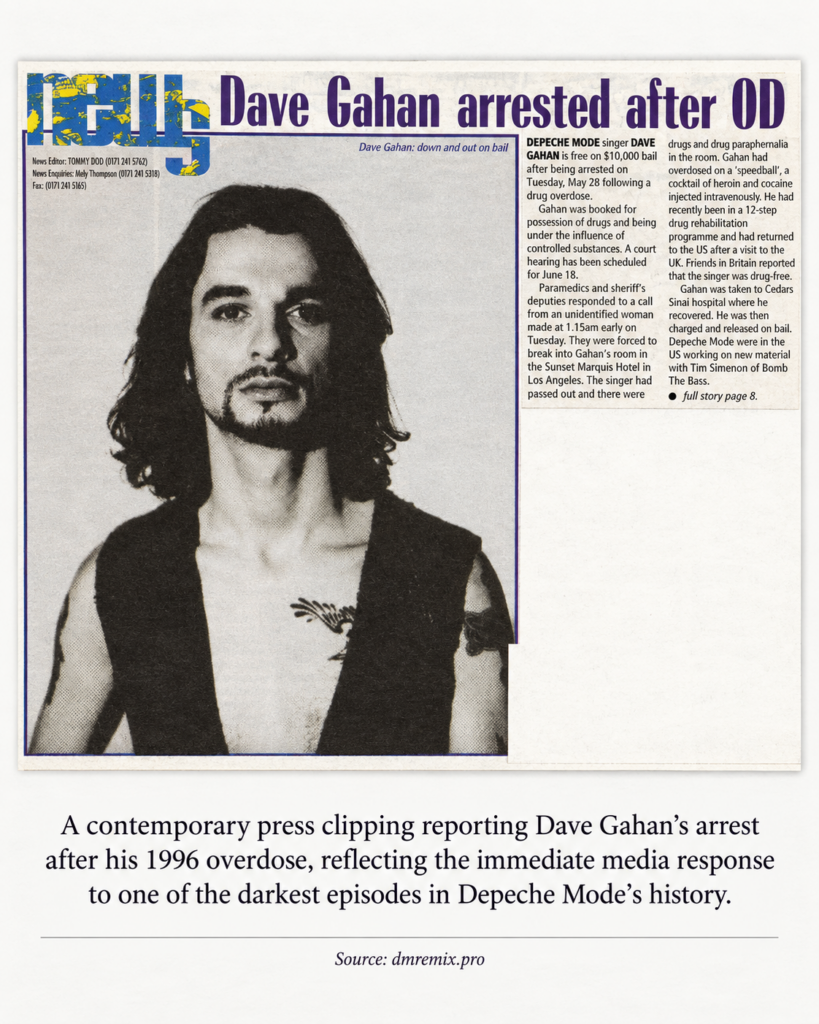
Paramedics revived him.
He later described an extraordinary out-of-body experience, recalling blackness and the sensation of looking down upon the attempts to save him.
He survived.
And at this point, according to any conventional understanding of how bands operate, Depeche Mode should have ended.
Their original songwriter had left.
Their principal studio architect had left.
Their singer was suffering devastating addiction and had just died on a bathroom floor.
There were now three members, one of whom was Andy Fletcher.
You would forgive a record company executive for quietly putting the stationery into storage.
Instead, Depeche Mode made another album.
They Simply Refused to Stop
Gahan entered recovery.
Gore continued writing.
Fletcher remained the organisational glue.
In 1997, Depeche Mode released Ultra.
It was a success.
Then came Exciter.
Then Playing the Angel.
Then Sounds of the Universe.
Then Delta Machine.
Then Spirit.
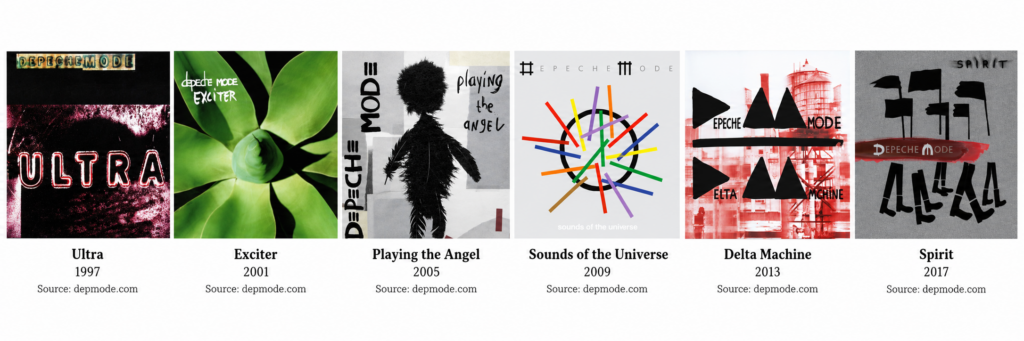
The supposedly finished band simply continued appearing every few years with another album and another enormous tour, like a particularly gloomy council tax bill.
It also became increasingly obvious that Depeche Mode had achieved something unusual.
They had survived not by remaining unchanged, but by repeatedly losing pieces of themselves.
Clarke left and Gore became the songwriter.
Wilder left and the production methods changed.
Gahan nearly died and returned sober.
Every version of Depeche Mode appeared to contain fewer of the ingredients supposedly essential to Depeche Mode.
And yet the thing stubbornly remained Depeche Mode.
Then There Were Two
The next loss was different.
Andy Fletcher had been there from the beginning.
Whatever arguments existed about his precise musical contribution, he had been part of the internal structure of the band for more than 40 years.
In May 2022, Fletcher died suddenly at the age of 60.
This time there was no creative disagreement, no resignation letter and no possibility of a later reunion.
Only Gahan and Gore remained.
Their response was Memento Mori.
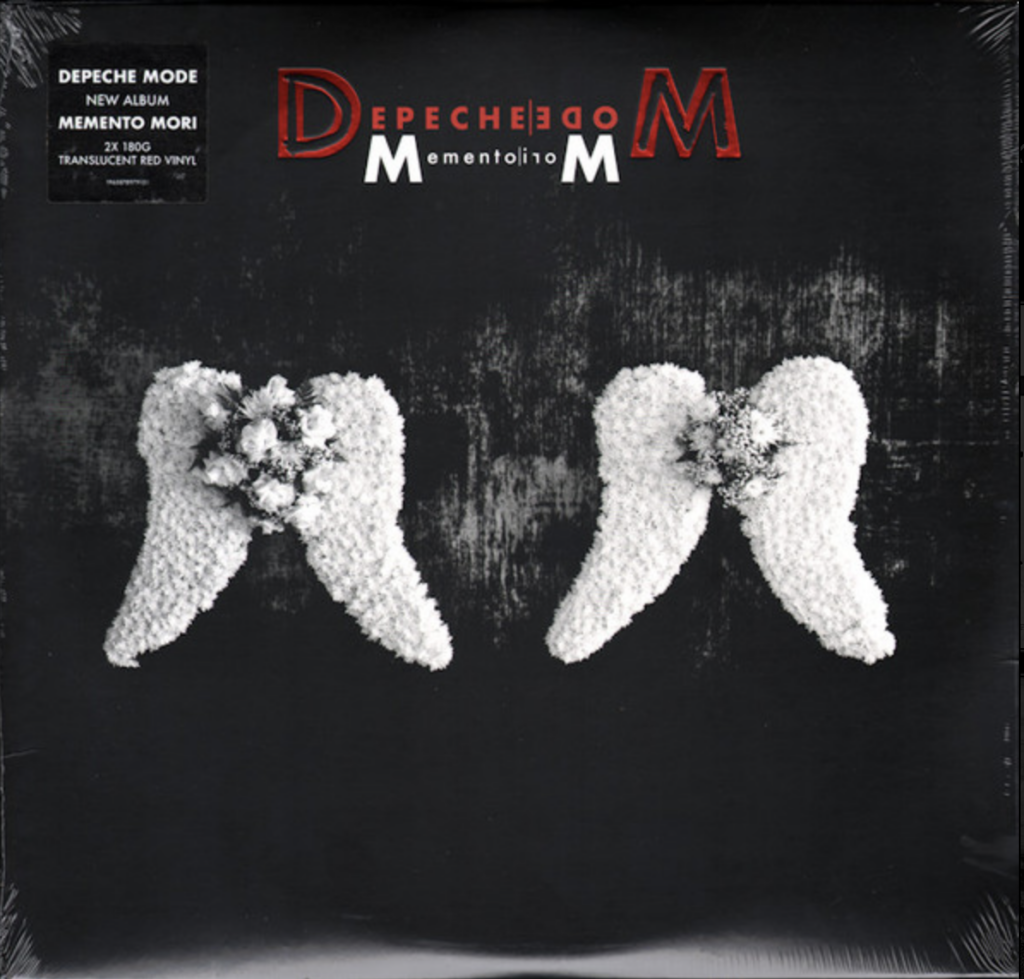
Source: depmode.com
The title is Latin for “remember that you must die.”
For most bands this might have sounded theatrically gothic.
For Depeche Mode it was bordering on administrative guidance.
Released in 2023, Memento Mori was followed by another major world tour, including three sold-out performances in Mexico City that formed the basis of the concert film Depeche Mode: M.
More than 40 years after Just Can’t Get Enough, Depeche Mode were still filling arenas.
The Band That Shouldn’t Still Exist
There is a temptation when looking back at long careers to create the illusion that everything was inevitable.
It wasn’t.
There was no inevitable route from four young men in Basildon with synthesisers to one of the most successful electronic bands in history.
At almost every important stage, Depeche Mode lost somebody they appeared unable to replace.
Vince Clarke was the songwriter.
Until he wasn’t.
Alan Wilder was essential to their sound.
Until he wasn’t there.
Dave Gahan appeared unlikely to survive the 1990s.
He did.
Andy Fletcher was the constant presence linking the modern band to its beginnings.
Then he was gone too.
Perhaps that is the genuinely remarkable thing about Depeche Mode.
It isn’t merely that they survived success, addiction, creative resentment, death, departures and the assorted lunacy that accompanies four decades in popular music.
It is that every time Depeche Mode appeared to lose the person without whom Depeche Mode could not possibly continue, somebody apparently forgot to inform Depeche Mode.
And so Martin Gore wrote another song.
Dave Gahan walked onto another stage.
Several thousand people put on black T-shirts.
And the bloody thing carried on… F***ing legends.