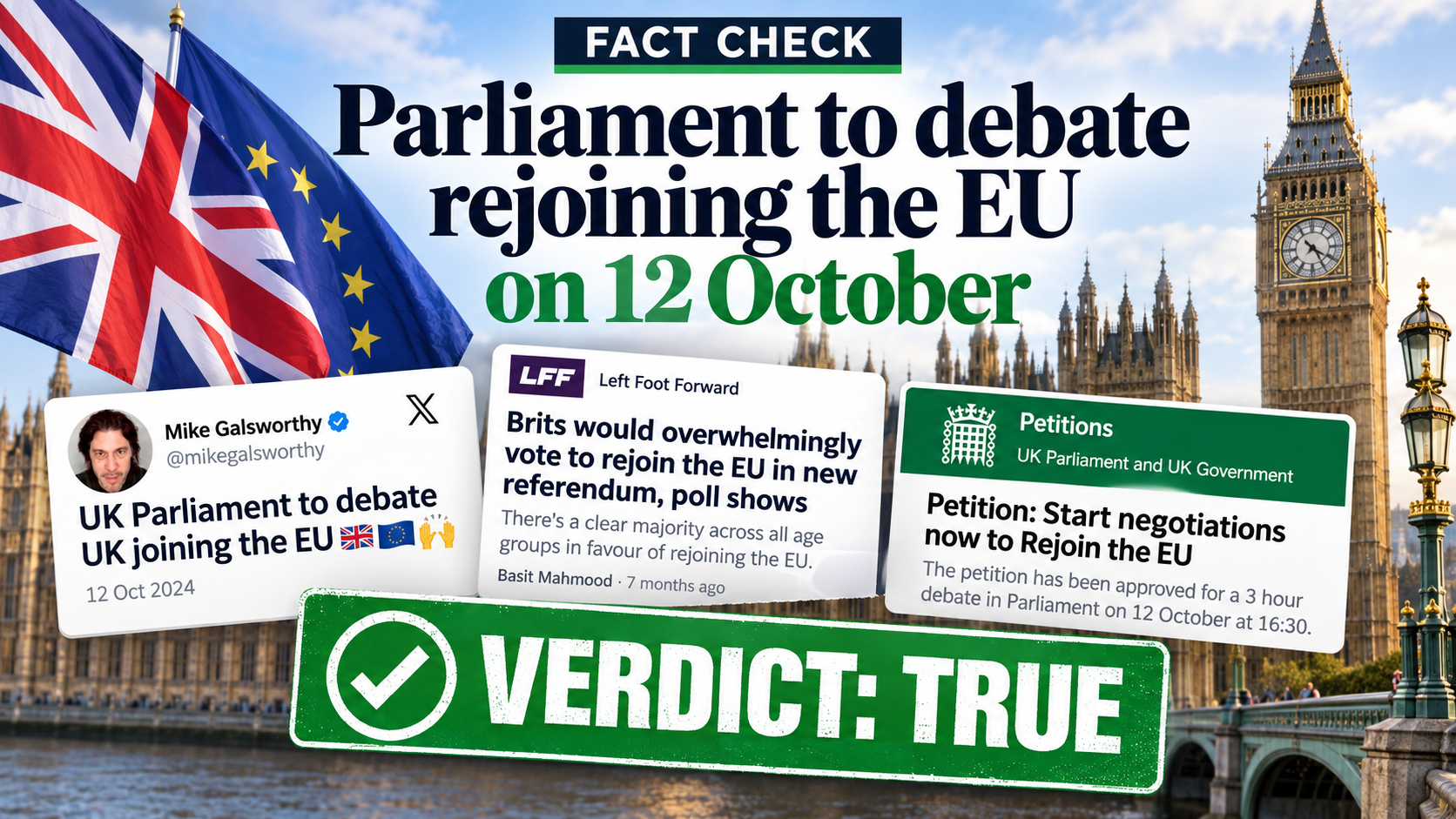
VERDICT: TRUE
… But this is a petition debate, not a parliamentary vote on rejoining the EU.
Claims circulating online that MPs will debate Britain rejoining the European Union on 12 October 2026 are correct. However, the significance of the debate can easily be overstated.

The official parliamentary schedule confirms that MPs will debate e-petition 749128, “Apply to Rejoin the EU as soon as possible to increase growth in the UK,” at 4.30pm on Monday 12 October. The debate will take place in Westminster Hall, rather than the main House of Commons chamber.
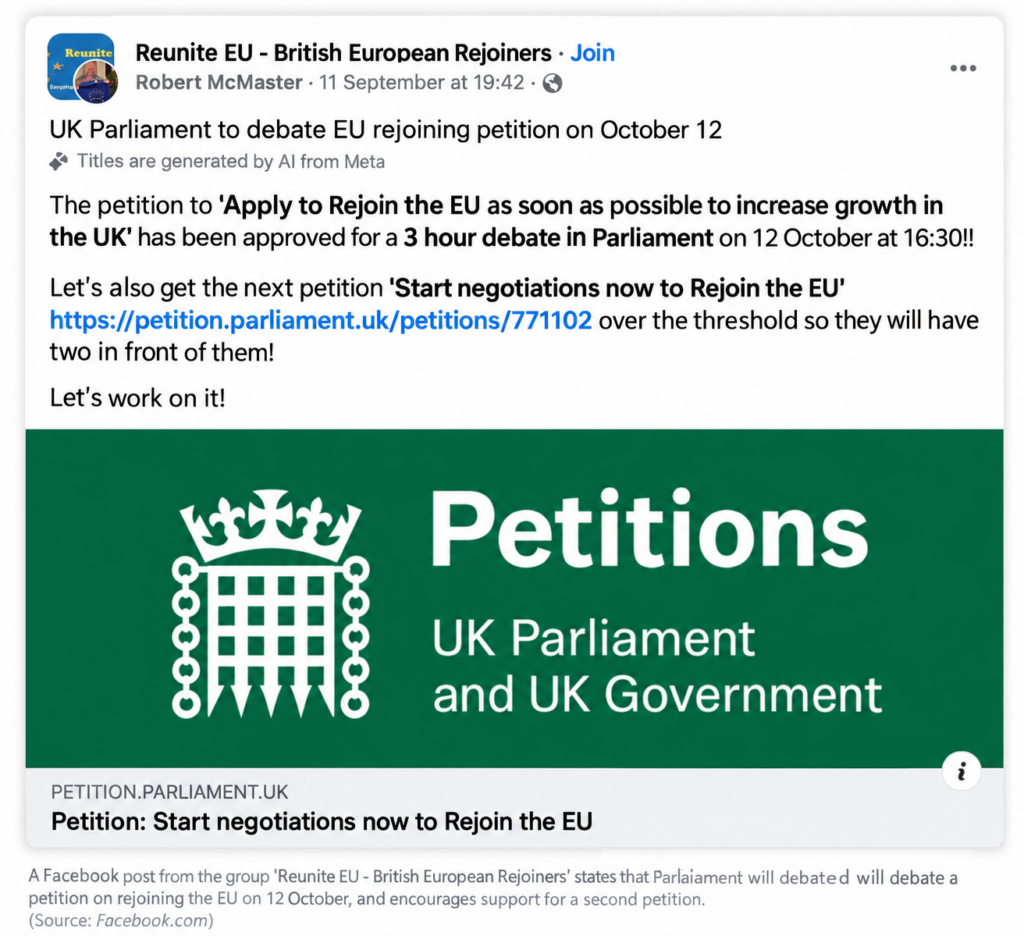
The petition attracted 111,687 signatures, passing the 100,000 threshold at which petitions are considered for debate. Its authors call on the Government to apply for the UK to rejoin the EU, arguing that Brexit has damaged economic growth and trade.
But Parliament is not voting to rejoin
Petition debates in Westminster Hall are general debates. MPs can argue for or against the proposal, question ministers and press the Government to act, but there will not be a vote on whether Britain should rejoin the EU at the end.
Parliament’s own guidance says petition debates do not directly change policy or law and do not end with MPs voting to implement the petition’s request. How petition debates work
So claims that “Parliament will debate rejoining the EU on 12 October” are accurate. Claims suggesting MPs will vote on rejoining, or that the debate itself could return Britain to the EU, are not.
Would Britain now vote to rejoin?
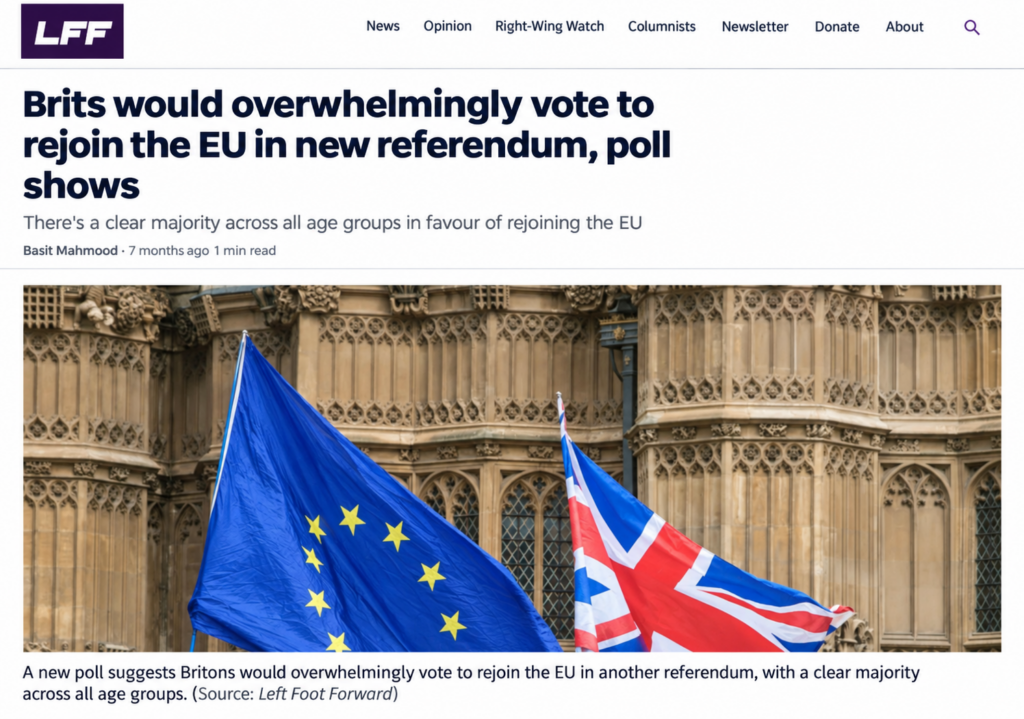
There is substantial evidence that Rejoin currently leads Stay Out, although describing that support as “overwhelming” goes further than the polling can safely establish.
The non-partisan What UK Thinks: EU poll-of-polls currently puts the average at approximately 61% for being in the EU and 39% for remaining outside, once undecided respondents are excluded. Its six most recent polls all showed a Rejoin lead, although individual results ranged from 57–43 to 65–35.
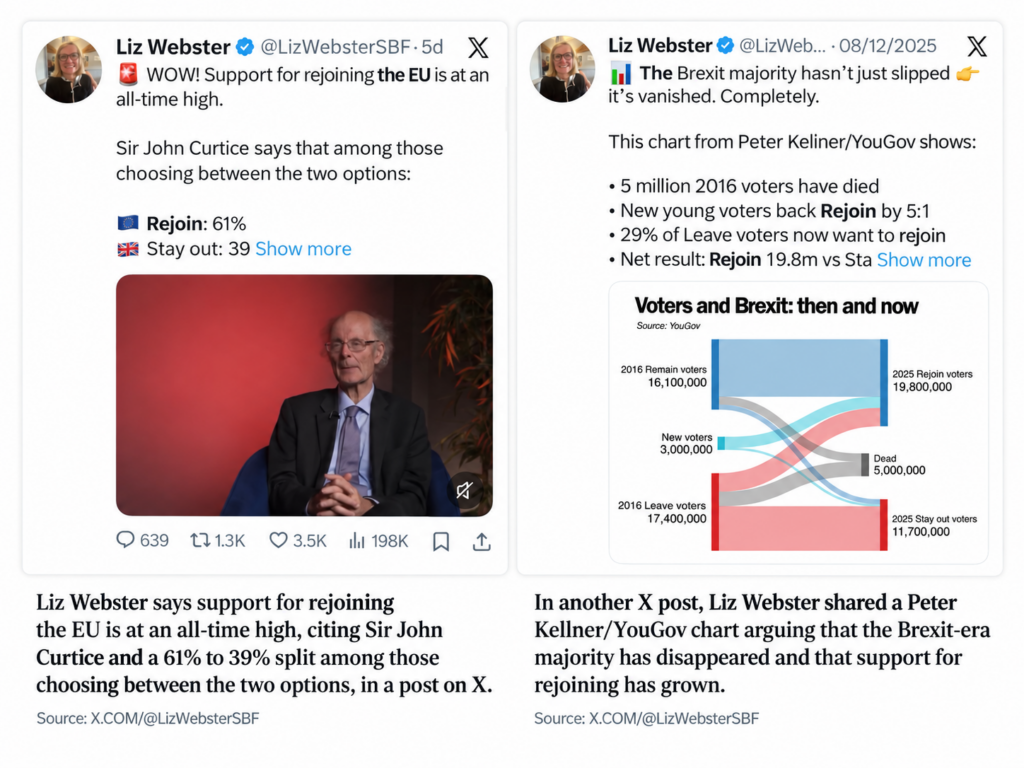
Ipsos found a similar picture in May: 52% of Britons said the UK should apply to rejoin, against 33% who said it should stay out. Among people considered likely to vote in a referendum, the figures were 58% to rejoin and 37% to stay out — equivalent to 61–39 after undecided voters are removed.
But the picture becomes less decisive when voters are confronted with the possible conditions of membership.
YouGov found in June that 55% supported rejoining in principle, but support fell to 35% when respondents were told Britain might have to rejoin without the opt-outs it previously enjoyed.
And research published by British Future on 9 September 2026 found 46% would vote to rejoin, 29% to stay out and 25% were undecided. The researchers specifically concluded that the advantage for Rejoin did not represent a settled majority consensus, with attitudes changing when issues such as free movement, financial contributions and other trade-offs were introduced.
The bottom line…
Britain is getting a parliamentary debate about rejoining the European Union on 12 October.
It is not a vote on rejoining, nor does it oblige the Government to hold another referendum.
Polling meanwhile provides strong evidence that, if voters were simply asked “Rejoin or Stay Out?” today, Rejoin would begin with a sizeable lead. But the evidence does not establish that Britain would overwhelmingly vote to rejoin under the real-world terms of a future membership agreement. How the question, and the conditions attached to re-entry, were framed could make a substantial difference.
What do you think?
Does the 12 October debate mark a meaningful shift in the UK’s relationship with the EU, or is it simply the result of a petition reaching the required threshold? And do the latest polls reflect what you’re hearing from people around you?
Join the discussion below; but keep it civil, stick to the evidence, and challenge the claim rather than the person.